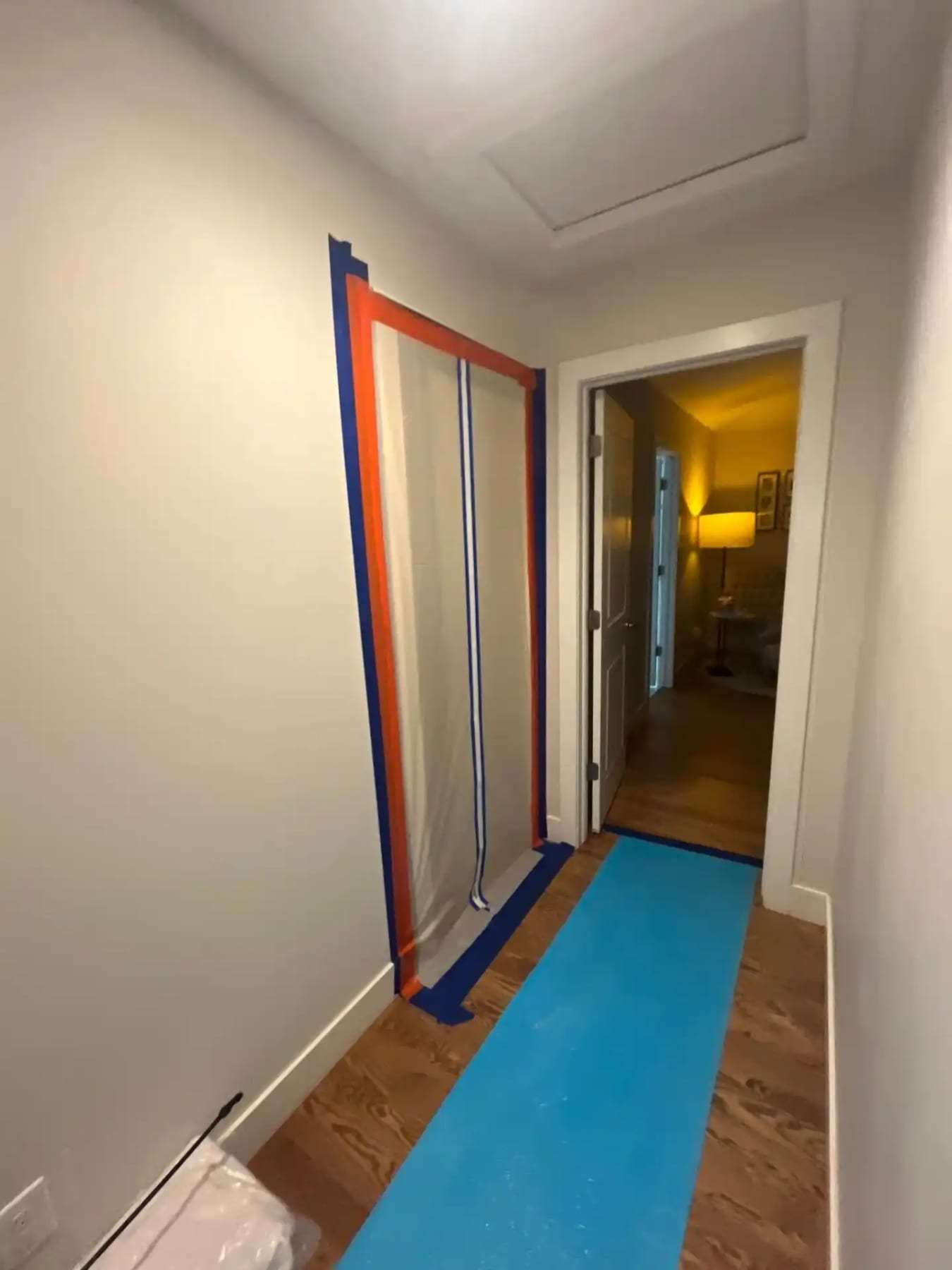
Hallway lined with containment plastic and a protective runner on the floor. A general example of this kind of work, not a photo of a particular home, business or job.
Room-by-room places to check
Sniff each spot on a day when the smell is present; the strongest ones go to the top of the list.
- Kitchen: openings behind and under the sink, around the gas or water lines, behind the refrigerator and range.
- Bathroom: the gap around the tub spout and supply pipes, under the vanity, around the toilet supply and behind the medicine cabinet.
- Heating: where radiator pipes pass through the floor, and behind baseboard heaters.
- Electrical: outlet and switch boxes on walls shared with another unit, and ceiling fixture boxes.
- Baseboards: the gap between baseboard and floor along shared walls, especially in old units with uneven floors.
- Doors: the gap under the entry door and worn weatherstripping around its frame.
- Closets: openings for pipes, old wiring or abandoned ducts at the back of closets.
- Ceiling: recessed lights, fan housings and attic hatches on top floors.
- Old vents and registers that no longer serve a purpose.
Typical materials for each kind of gap
| Gap | Common approach | Who usually does it |
|---|---|---|
| Outlet and switch boxes | Foam gaskets behind cover plates | Renter with approval, or maintenance |
| Pipe penetrations under sinks | Appropriate sealant; fire-rated where the opening passes between units | Maintenance or contractor |
| Radiator pipe sleeves | Heat-tolerant sealant or escutcheon plates | Building engineer or heating contractor |
| Baseboard gaps | Paintable caulk along the joint | Maintenance or painter |
| Entry door | Door sweep and new weatherstripping | Maintenance |
| Abandoned ducts and vents | Blocked and sealed behind the grille after confirming they serve nothing | Contractor |
Doing it in a sensible order
Get permission
Renters should send the landlord a list of proposed spots and ask who will do the work. Condo owners should check whether association approval is needed.
Start with the easy wins
Outlet gaskets, a door sweep and weatherstripping take little time and are often allowed without much discussion.
Move to plumbing and heating openings
These usually need maintenance, because of fire separation and because the pipes belong to the building.
Check the results with your log
Keep logging for a couple of weeks after sealing to see whether the pattern changed and which spots still need attention.
General information for Capitol Hill, not a quote or professional advice. In an emergency, call 911.